Cleaning Boat Decks Guide: Achieve a Spotless Shine
Keeping your boat deck spotless is more than just about looks. Experts say using the right cleaning supplies can actually extend your boat’s life by years. Most boat owners think regular rinsing is enough. That idea skips the crucial fact that what you use—and how you use it—can make or break your vessel’s longevity.
Table of Contents
Quick Summary
Key Point | Explanation |
1. Gather marine-specific cleaning supplies | Use specialized products designed for boat surfaces to ensure effective and safe cleaning. |
2. Remove debris thoroughly before cleaning | Start by eliminating loose materials to prevent scratches and ensure a deep clean of the deck. |
3. Apply cleaning solution carefully | Dilute the solution correctly and apply evenly to maximize cleaning, avoiding surface damage. |
4. Scrub methodically with the right tools | Use appropriate brushes for your deck material, focusing on high-traffic areas for effective dirt removal. |
5. Rinse thoroughly with fresh water | Ensure all cleaning residues are removed to protect the deck and maintain a pristine finish. |
Step 1: Gather Your Cleaning Supplies
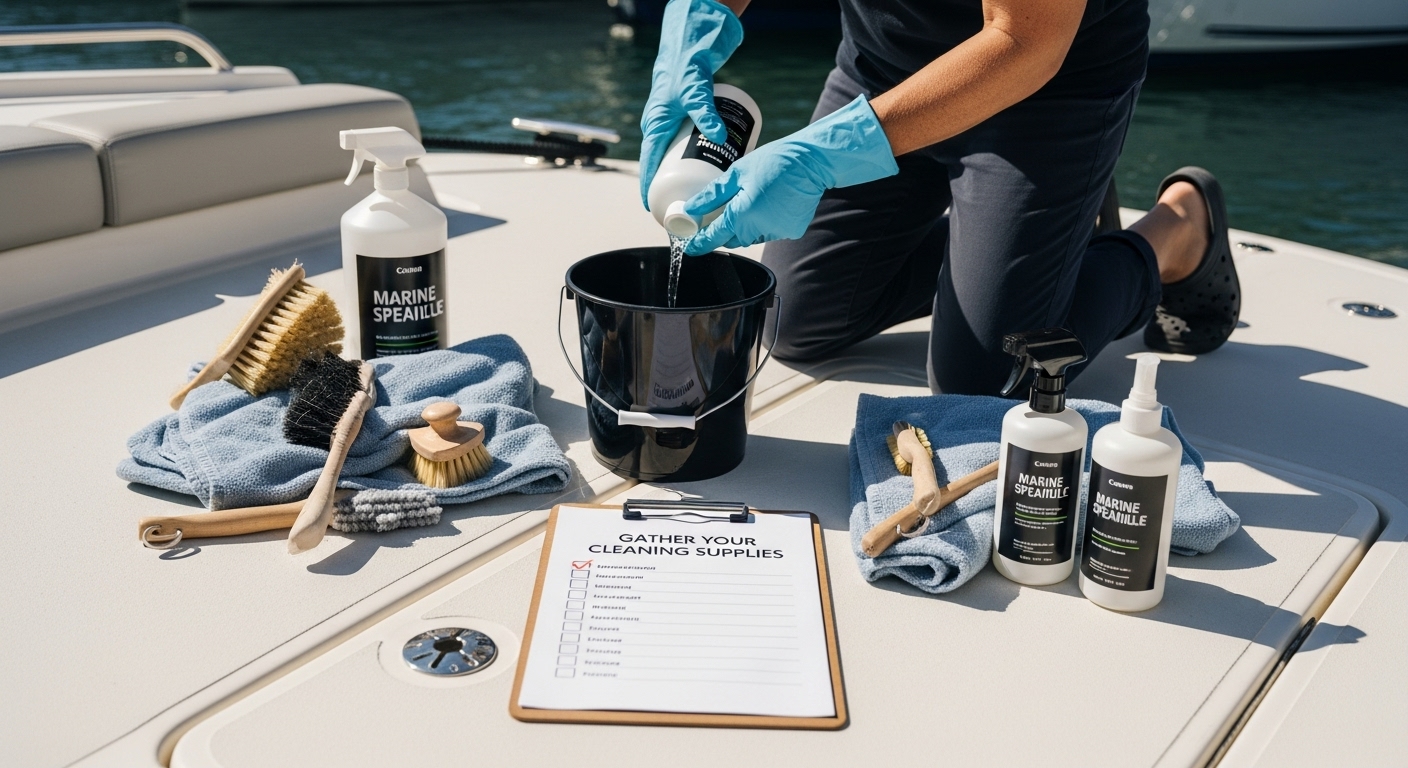
Preparing to clean your boat deck requires strategic planning and the right equipment. Before diving into the cleaning process, assembling a comprehensive set of supplies will streamline your maintenance routine and ensure a thorough result. Professional boat maintenance starts with proper preparation.
Your boat cleaning arsenal should include several key categories of tools and cleaning solutions. Start by collecting marine-specific cleaning products designed to handle salt residue, grime, and potential environmental contaminants. Look for cleaners specifically formulated for marine surfaces that won’t damage your boat’s exterior materials.
Essential cleaning supplies for your boat deck include:
Heavy-duty scrub brushes with varying bristle stiffness
Marine-grade deck cleaner solution
Soft microfiber towels
Bucket with clean water
Protective rubber gloves
Non-abrasive sponges
Extendable handle for brush attachments
Soft-bristled detail brushes
According to Australia’s Department of Agriculture, Fisheries and Forestry, boat owners must also consider biosecurity when cleaning. This means thoroughly rinsing equipment and disposing of waste water appropriately to prevent spreading marine pests.
Choose cleaning tools that match your specific deck material. Fiberglass, wood, and non-skid surfaces each require slightly different approaches. Investing in quality cleaning tools protects your boat’s surface and extends its longevity. Synthetic materials typically need gentler treatment compared to more robust surfaces.
Consider wearing protective clothing during the cleaning process. Long sleeves, non-slip shoes, and safety glasses will protect you from cleaning chemicals and potential splashes. Always work in a well-ventilated area and follow manufacturer instructions for any cleaning solutions you plan to use.
By meticulously gathering your supplies before starting, you’ll create an efficient workflow that makes boat deck maintenance smoother and more effective. Taking time to prepare demonstrates the care and attention professional boat owners invest in their vessels.
Here is a summary table highlighting essential cleaning supplies for your boat deck, along with their specific purposes and recommendations for use.
Tool or Material | Purpose | Recommendation/Notes |
Heavy-duty scrub brushes | Lift and remove tough grime from deck surfaces | Use varying bristle stiffness for material |
Marine-grade deck cleaner | Break down salt, marine residue, and grime | Choose marine-specific, biodegradable formula |
Microfiber towels | Dry and polish deck without scratching | Use lint-free towels for final drying |
Bucket with clean water | For dilution and rinsing of tools and solutions | Use clean, fresh water only |
Protective rubber gloves | Shield hands from chemicals and debris | Wear for all stages involving chemicals |
Non-abrasive sponges | Clean delicate or detailed areas | Avoid using on rough or non-skid surfaces |
Extendable handle for brushes | Reach distant corners and hard-to-access spots | Attach appropriate brush heads |
Soft-bristled detail brushes | Remove debris and clean textured or small areas | Ideal for non-skid or patterned decks |
Step 2: Remove Debris from the Deck
Cleaning your boat deck begins with a thorough debris removal process that sets the foundation for a comprehensive maintenance routine. Removing loose materials prevents scratching and allows for a more effective deep clean. Start by carefully surveying the entire deck surface, identifying and eliminating everything from loose leaves and sand to small twigs and accumulated marine growth.
Begin with a systematic approach using a soft-bristled brush or marine-specific deck broom. Sweep gently across the surface, working from the center of the deck outwards to prevent redistributing debris. Pay special attention to corners, edges, and hard-to-reach areas where organic materials tend to accumulate. Gentle sweeping motions protect your deck’s surface from unnecessary scratching while effectively collecting loose debris.
According to Agriculture Victoria, boat owners must be particularly careful about removing potential marine pests during this initial cleaning stage. Look for any signs of biological growth, small organisms, or unfamiliar materials that might have attached themselves to your deck during previous voyages.
For more stubborn debris, use a specialized marine vacuum or handheld vacuum with soft attachments. This method proves especially effective for removing fine particles like sand, salt crystals, and small organic materials that simple sweeping might miss. Work methodically, ensuring you cover every inch of the deck surface.
Special consideration should be given to textured or non-skid surfaces. These areas often trap debris more effectively and require more detailed attention. Use a soft-bristled detail brush to gently work out any materials lodged in the textured patterns. Be patient and thorough, understanding that these surfaces need extra care to prevent damage while ensuring a complete clean.
Verify your debris removal by doing a final visual and tactile inspection. Run your hand lightly across the deck surface, feeling for any remaining particles. Use bright lighting to help identify any missed spots. A clean surface should feel smooth and free of loose materials, setting the perfect stage for the next steps in your boat deck cleaning process.
Remember that debris removal is more than just aesthetic maintenance. It protects your boat from potential long-term damage, prevents scratching during subsequent cleaning stages, and helps maintain the overall integrity of your vessel’s deck surface.
Step 3: Apply Cleaning Solution to the Surface
Applying the right cleaning solution is a critical step in achieving a pristine boat deck that looks professional and maintains its integrity. Proper application protects your boat’s surface while removing stubborn grime and salt residue. The goal is to select and apply a cleaning solution that effectively breaks down dirt without causing damage to your boat’s specific deck material.
Begin by diluting your marine-grade deck cleaner according to the manufacturer’s instructions. Concentration matters significantly professional boat maintenance. Too strong a solution can strip protective coatings, while too weak a mixture might prove ineffective against tough marine buildup. Mix your cleaning solution in a clean bucket, ensuring precise measurements.
According to Western Australian Department of Transport, boat owners should prioritize environmentally friendly cleaning products that minimize harm to marine ecosystems. Choose biodegradable, phosphate-free cleaners that effectively clean without introducing harmful chemicals into the water.
Start applying the cleaning solution from the lowest point of your deck, working systematically upwards. Use a soft-bristled brush or marine sponge to spread the solution evenly, applying gentle but consistent pressure. Work in small sections to ensure thorough coverage and prevent the solution from drying before you can rinse. This methodical approach guarantees no areas are missed and allows you to monitor the cleaning process closely.
For textured or non-skid surfaces, use a soft brush with medium-length bristles that can reach into the surface’s grooves without causing scratches. Move the brush in circular motions, allowing the cleaning solution to penetrate and lift dirt effectively. Pay extra attention to areas prone to dirt accumulation like corners, edges, and around deck fittings.
Your verification process involves a careful visual and tactile inspection. After applying the solution, the deck should look uniformly wet with no dry patches or uneven application. Run your gloved hand lightly across the surface to ensure consistent coverage. Look for areas where dirt begins to lift and the surface starts to look cleaner.
Remember that patience is key during this stage. Rush the process, and you risk incomplete cleaning or potential surface damage. Take your time, work methodically, and allow the cleaning solution to do its job before moving to the next stage of your boat deck maintenance routine.
Step 4: Scrub the Deck Thoroughly
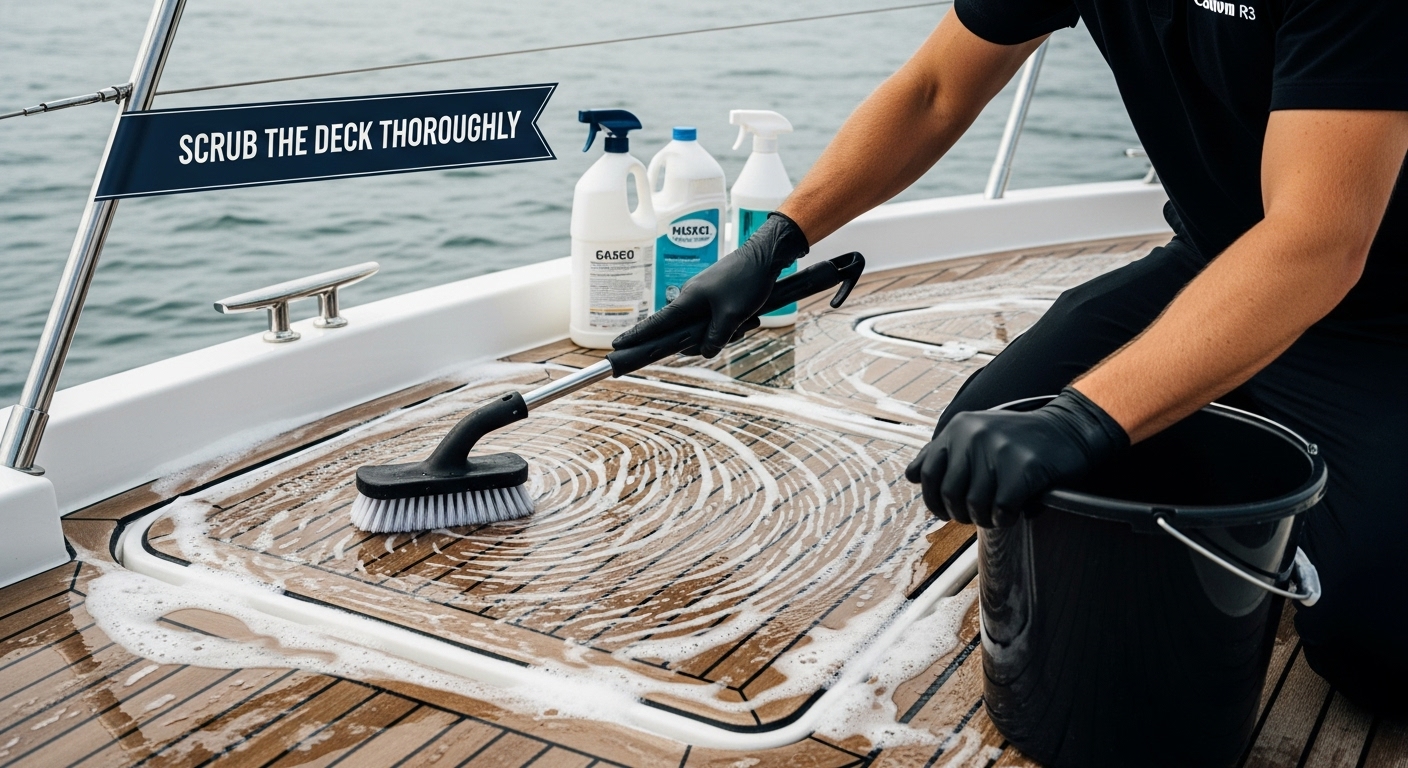
Scrubbing your boat deck represents the most labor-intensive and critical phase of the cleaning process. Proper scrubbing removes embedded dirt, salt residue, and potential marine growth that can damage your vessel’s surface if left untreated. This step transforms your initial cleaning efforts into a professional-grade boat maintenance routine.
Choose your scrubbing tool carefully based on your deck’s specific material. Fiberglass, wood, and non-skid surfaces each require different approaches. Soft-bristled brushes work best for most marine surfaces, preventing scratches while providing enough friction to lift stubborn grime. For tougher areas, consider using brushes with medium-stiff bristles, but always test a small inconspicuous area first to ensure you won’t damage the surface.
According to Great Barrier Reef Marine Park Authority, boat owners should prioritize environmentally friendly cleaning techniques. Begin scrubbing using circular motions, working the cleaning solution deep into the deck’s surface. Start from one end of the deck and move systematically, ensuring you don’t miss any spots. Apply consistent but gentle pressure to avoid damaging the surface while effectively removing dirt and salt buildup.
Pay special attention to high-traffic areas and spots prone to accumulating grime. Corners, edges around deck fittings, and areas near the boat’s railings typically require extra scrubbing. Use detail brushes for these intricate spaces, ensuring you remove every bit of dirt without causing surface damage. Rotate your scrubbing tools and techniques to address different surface textures effectively.
For non-skid surfaces, use a brush with bristles that can reach into the textured patterns. These areas collect more dirt and require a more detailed approach. Work the brush carefully into the grooves, ensuring you lift dirt without forcing debris deeper into the surface. Move your brush in multiple directions to ensure comprehensive cleaning.
Verify your scrubbing effectiveness through a thorough visual and tactile inspection. The deck should look uniformly clean with no remaining dark spots or visible grime. Run your hand across the surface feeling for any remaining rough patches. Proper scrubbing leaves the deck feeling smooth and free of debris.
Remember that patience and technique matter more than brute force. Take your time, work methodically, and maintain consistent pressure throughout the scrubbing process. Your careful approach will result in a boat deck that looks professionally maintained and protected from potential long-term damage.
Step 5: Rinse the Deck with Fresh Water
Rinsing your boat deck with fresh water represents the critical final cleaning stage that removes all remaining cleaning solution and loosened debris. This step ensures a spotless finish and protects your boat’s surface from potential chemical residue that could cause long-term damage or discoloration.
Select a high-quality garden hose with an adjustable nozzle that allows you to control water pressure and spray pattern. Moderate water pressure is key to effectively removing cleaning solution without potentially damaging your deck’s surface. Start at the highest point of the deck and work downwards, allowing gravity to help carry away dirt and cleaning chemicals.
According to NSW Government maritime guidelines, boat owners should thoroughly rinse their vessels after each use to maintain environmental standards and protect marine ecosystems.
Use a sweeping motion with the water stream, ensuring complete coverage of the entire deck surface. Pay special attention to corners, edges, and areas around deck fittings where cleaning solution might accumulate. Rotate the hose nozzle to create different spray patterns that can dislodge any remaining debris or cleaning product residue.
For non-skid or textured surfaces, angle the water stream slightly to ensure you flush out dirt trapped in the surface’s grooves. These areas often require more careful rinsing to prevent dirt from remaining embedded in the deck’s texture. Move methodically, watching the water run clear and free of any soapy appearance.
Your verification process involves a careful visual and tactile inspection. The deck should look uniformly clean with no visible soap residue or water spots. Run your hand across the surface feeling for smoothness and checking that no cleaning solution remains. Bright lighting can help you identify any missed spots or remaining soap film.
Proper rinsing is more than just a final step it’s your boat’s protective finish.
Take your time, be thorough, and ensure every inch of the deck receives clean, fresh water. This final rinse not only completes your cleaning process but also helps protect your boat’s surface from potential salt and chemical buildup that could cause long-term damage.
Step 6: Inspect and Dry the Deck
Inspecting and drying your boat deck is the final crucial stage of maintenance that ensures your vessel remains in top condition and prevents potential long-term damage. This step transforms your cleaning process from a simple wash to a comprehensive boat care routine that protects your investment and maintains your vessel’s aesthetic appeal.
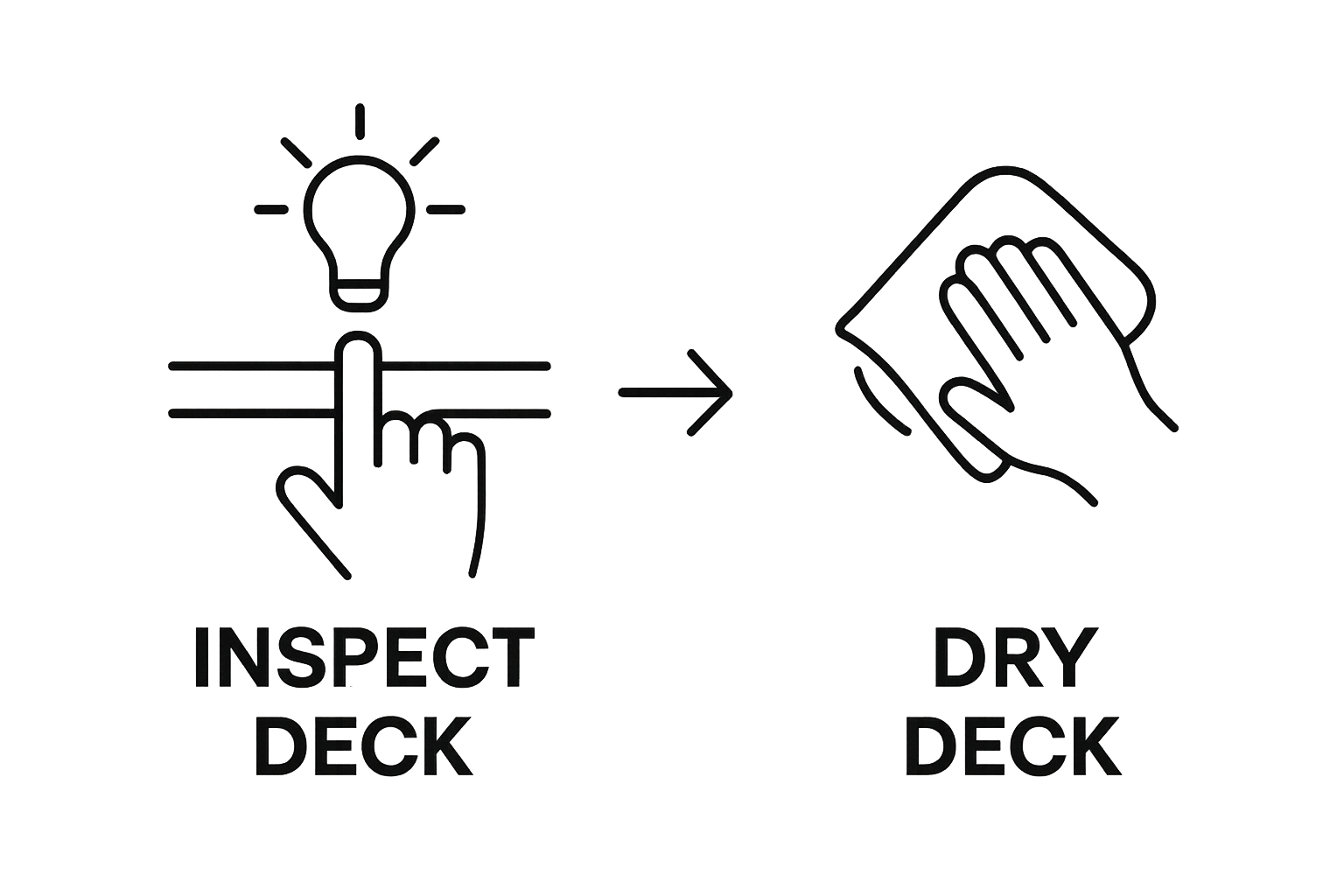
Begin your inspection by carefully examining the entire deck surface under bright, natural light. Look for any remaining water spots, missed cleaning areas, or potential surface imperfections that might have been revealed during the cleaning process. Sunlight is your best ally in detecting subtle irregularities that might go unnoticed under artificial lighting.
According to the Check. Clean. Dry. protocol, boat owners should thoroughly inspect their vessels to prevent the spread of marine pests and ensure comprehensive maintenance.
Use clean, soft microfiber towels to begin the drying process. These towels are specifically designed to absorb water without leaving lint or scratching delicate surfaces. Work systematically from the highest point of the deck downwards, using gentle, sweeping motions to prevent water from pooling or leaving streaks. Microfiber towels are your precision tool for achieving a spotless finish.
Pay extra attention to textured or non-skid surfaces, which tend to retain water more effectively. Use a slightly damp microfiber towel to remove excess moisture from these areas, ensuring you don’t leave standing water that could potentially cause mildew or promote bacterial growth. For hard-to-reach corners and intricate deck fittings, consider using smaller, targeted microfiber cloths.
Your verification process involves a comprehensive sensory check. The deck should feel completely dry to the touch, with no water droplets or damp areas. Run your hand across the surface, checking for smoothness and confirming that no water remains. Bright, natural light will help you identify any remaining moisture or water spots.
A thorough inspection and drying process is the hallmark of a dedicated boat owner. Take your time, be meticulous, and remember that these final moments of care can significantly extend your boat’s life and maintain its pristine appearance. Your dedication to this final step transforms a simple cleaning into a professional-grade maintenance routine.
The following checklist table helps ensure that each step of the boat deck cleaning process is carefully completed and verified for best results.
Step | Verification Tip | What to Check For |
Remove Debris | Visual/tactile inspection with hand under bright light | No loose particles remaining |
Apply Cleaning Solution | Confirm uniform wetness across deck surface | No dry or unevenly applied patches |
Scrub Deck Thoroughly | Visual and tactile confirmation of surface cleanliness | No dark spots or embedded grime |
Rinse with Fresh Water | Watch for water running clear, no soap residue visible | No soap film, no chemical smell |
Dry and Inspect | Surface is fully dry to the touch, crystal clear in light | No streaks, water spots, or dampness |
Ready for a Professional Shine Your Deck Deserves?
You have followed each step to clean your boat deck and protect it from damage, but stubborn grime, salt, and environmental buildup can still threaten your hard work. Achieving a spotless shine is more than just a one-time chore—it is a commitment to your boat’s longevity and beauty. Maybe you still notice persistent stains or worry about biosecurity risks after cleaning. You want results that last and confidence that every inch of your deck has been cared for by pros.

Leave uncertainty behind. Trust your boat to our expert team at Lightning Boat Builders, where we specialize in professional mobile detailing, antifoul, and custom fiberglass work designed for superior protection. Make today the day you elevate your boat deck maintenance with solutions guaranteed to preserve your investment and deliver a flawless finish. Visit our main page here to explore our services and let us help you keep your boat in perfect condition.
Frequently Asked Questions
What supplies do I need to clean my boat deck?
To clean your boat deck effectively, gather heavy-duty scrub brushes, a marine-grade deck cleaner solution, soft microfiber towels, a bucket with clean water, protective rubber gloves, non-abrasive sponges, and an extendable handle for brush attachments. It’s essential to choose cleaning products specifically designed for marine surfaces.
How do I remove debris from my boat deck before cleaning?
Start by surveying the deck for loose materials like leaves, sand, and twigs. Use a soft-bristled brush or marine-specific deck broom to sweep gently from the center outwards. Special care should be taken with textured or non-skid surfaces, using a detail brush to remove debris lodged in the grooves.
How should I apply the cleaning solution to my boat deck?
Dilute the marine-grade deck cleaner according to the manufacturer’s instructions. Apply the solution starting from the lowest point of the deck and work upwards using a soft-bristled brush or marine sponge. Focus on small sections and ensure even coverage to avoid drying before rinsing.
What is the best method for rinsing my boat deck after cleaning?
Use a garden hose with moderate water pressure to rinse your boat deck, starting at the highest point and moving downward. Ensure to use sweeping motions for complete coverage, particularly around corners and edges, to remove all cleaning solution residue. Bright lighting can help confirm that no soap remains after rinsing.
Comments